 It was 3am when my phone rang. My deputy called to report a slashing in a backyard of West Hanover Township, a peaceful, suburban area, west of Harrisburg, Pennsylvania—a place people go to experience a little bit of country. The fact that there was a murder there seemed highly unusual.
The victim, Darlene Ewalt, was a 42-year-old female who had been sitting on her back patio, having a conversation with a man on the phone, around 2am. Suddenly, she cried out, “Oh my God!” The man on the line heard the phone drop and then silence. It was so sudden and her voice was so filled with horror, that he immediately called 911. Police were dispatched for a welfare check. Her husband, who didn’t know exactly where his wife was in the house, allowed police full access to the home for a search. The police found her dead body in the back patio. When I arrived, I found her slumped over in a chair. An incandescent patio light shined an eerie a spotlight on the gruesome scene. Her left leg was sprawled out and her right leg bent. In front of her on top the white patio table was a notebook and a full ashtray. I could see that the attack had been swift, purposeful and skilled. I sensed that the stealthy killer had come out of the darkness of the backyard, and not from inside the home. In a case like this, however, it is common that someone who knew Darlene was the killer. Both her husband and son were in the house at the time of death. Who was the man she was talking to at such an hour? What was her marriage like? Who would have known that she would be on the patio in the middle of the night? Why was the attack so clean, with no real confrontation or struggle from the victim? It seemed more like an assassination. This case didn’t fit any profile for domestic violence nor was this kind of assault even remotely expected in the realm of West Hanover violence. Inductive reasoning seemed to reach a standstill. As it turned out, the murderer was a statistical outlier, outside the bell curve. He was a married truck driver. For reasons unknown to anyone, he hunted women. Not for sexual assault, only to plunge a Rambo-style knife into the victim. A video was found in his possessions on how to hunt humans. The murderer was a serial killer, later known as the "Highway Killer." He had no connection to Darlene whatsoever. She was randomly chosen. Sporting dark, almost Ninja-type clothing, he had gone into a cul-de-sac, checked doors and sniffed out his prey. At the end of the street, he heard the voice of a woman talking on the phone. He climbed over a split-rail fence and entered Darlene’s backyard. Darlene was prey simply because she was female, alone and vulnerable. He mostly likely enjoyed stalking her, the quick, quiet attack—just one plunge and then the slash. I imagined he felt the warmth of her blood on his hands. I imagined him standing there a second afterwards, watching her slump back into the chair, the slow decent of her arms towards the ground. I imagined him stepping back, just two or three feet into the curtain of darkness, admiring his handiwork. I imagined him slowly walking away, occasionally glancing back at the lit stage, and what he considered a magnificent performance. All it takes is an instant for horror to ensue. Death does not discriminate. This case is closed, but there is always another story . . .
4 Comments
 What happened to the daughter Iris had to leave behind?
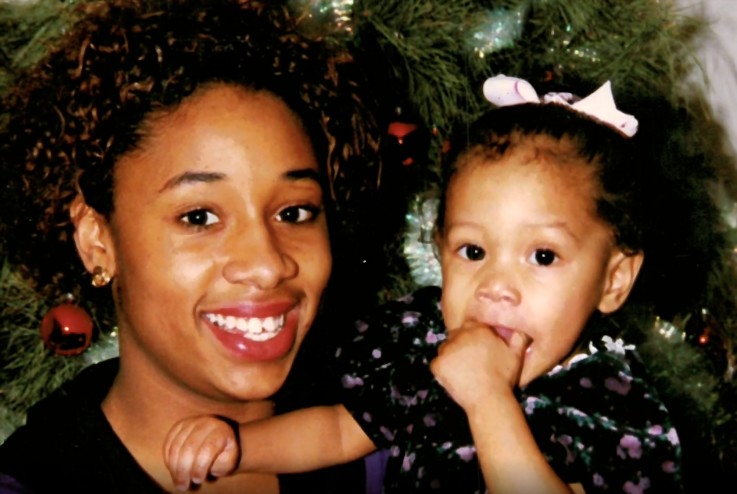
I had the privilege of recently talking to Iris’s family and friends to thank them for their bravery and support. When I asked Iris's daughter how she was coping and what she was doing now, she replied, “I just completed nursing school and I am going for my master’s degree as a nurse anesthesiologist.” My jaw dropped and my heart filled with admiration for this young lady who lost her mother at such an early age and the determination of the grandmother who raised her. You may remember that Iris was studying to be a nurse when she was murdered. She was robbed of fulfilling her dream. But through her daughter, Iris’s dream lives on. The greatest tribute her daughter could pay to her mother’s life is her ability to accomplish her mother’s unfulfilled mission. Homicide stories are never easy to tell. There is no real happy ending but this young lady left a legacy for us to remember. She overcame obstacles and emotional loss we can’t even begin to imagine. What an incredible example she has made of her own life. We can learn how to live by listening to the stories of the dead and learning from the loved ones who continue living on, courageously, despite tragedy.  Some people remember others by their name. I remember people by the way they died. To me each case is a story about that person. Once I have investigated their death, I have an intimate relationship with them. I remember past cases by the images of the scene, not by their names or where they lived, or the date they died. When I think of those cases everything comes back to me: the smell, the colors, and rooms—heavy with the energy and emotion of a life.
In this case, Iris communicated with me—not in words or movement—but in patterns at the scene, in her bedroom and on her body. An arm with the hand sticking up in the air told me the body had been repositioned. The sooting and stippling on the two gunshot wounds to the face told me this was a crime of passion, and not a random act. The marks on the skin made at close range are telling. The sooting is the dirt from the burnt gunpowder coming out of the barrel of the weapon. Stippling is the collection of little red dots that encircle the gunshot wound. The red dots are the result of partially spent grains of gunpowder burning the skin of the victim. The sooting and small dots on the skin told me the most about her story. Have you ever heard the phrase, “they were getting close”? This death was about a relationship. She was shot twice in the face and at close range —that’s getting close. One doesn’t inflict pain and then dispatch someone in such an intimate way if they are simply entering a random house for burglary. This death cried out intimacy and passion. It was the snapping of the cord of two people who knew each other on very personal terms. Nothing, not even death, happens in a vacuum. It was four days before Christmas. Most people were shopping on that particular Friday and streets were jammed. I had received a call from the Harrisburg police and headed out towards the crime scene as the car radio blared “Joy To The World.” I met with the identification detective who led me to the lower level of the house, which was the kitchen. A burnt smell filled the air. On the stove was a large amount of potato biscuits and cornbread that had been cooking and in the oven, which had been turned off. There was also what could best be described as a cremated chicken. A holiday meal had been interrupted, mid-preparation. I started to look around, and discerned blood transfer patterns on the refrigerator. We photographed them and calculated their height from the floor. This could tell us the body position and often an approximation of the height of the person making the transfers. There were a few areas in which it seemed that someone had been walking through some of the blood droplets on the floor. A bleeding person had been moving around the room— first at the refrigerator, then at the center of the sink and finally a more diminished droplet pattern leading of the stairs and into the living room area. The droplets were fewer going up the stairs, indicating that the victim had possibly been attempting to stop the flow of blood. When I reached the top of the landing I remember thinking that the house was in good condition from a housekeeping standpoint. People who clean and care for where they live and sleep are people who want or seek order within their own lives. On this floor the story of a young girl’s life and tragic death unfolded. I turned to my right and entered a bedroom area just off the living room was her body. She was supine on a carpeted floor, with one hand pointing in the air. I knew that this was a post mortem artifact or rigor mortis, when the body stiffens after death. I knew that she had been at one time prone and then rolled over several hours later. She was already communicating with me. Blood patterns around her also gave evidence of her movements. We processed the room and found the clothing that she must have worn downstairs when the altercation began. That clothes were off her body and that the body had been moved told us the story would have many twists and turns. I started to examine her and immediately saw two small caliber, very close range gunshot wounds. One shot was to the right cheek and went through the mouth into the left side of the jaw. The second wound was to the mouth and had taken out her central incisors or the front teeth. This shot destroyed her brain stem and was the lethal blow. There was blood and soot on the lower lip. Her face had multiple bruising on both her cheeks and around the eyes. I could see these wounds were the result of blunt and brutal trauma rather than artifact of the two gunshots. I also found defensive wounds on her arms and bruising. There were fractures on her hands. This had been a terrible combat. She had fought hard for her life. The two close up gunshot wounds to the face called out to me. These wounds were close. These wounds were personal. They were the final act of someone’s rage against someone they knew intimately. I discussed with the detective my thought that this was a crime of passion by someone who had a close relationship with her. I saw items around her room that told me this was a woman trying to change her life for the better. There were textbooks from a nursing program and the house was clean, organized and well kept. She was trying to improve her life, and possibly change some of the people she had associated with; it was all part of her struggle that day. The body was removed and one day later we cataloged in fastidious detail each hit, each scratch, each fracture, all mapping a tremendous struggle by this young woman. I drove home from the lab that day thinking about what I saw. It was the story of a broken relationship. I felt I knew this person when I left the scene that day. I received her secrets, and pieced together elements of her life and her efforts, communicating them to others, so they could bring an evil man to justice. I still see her face and most likely always will. Iris is an example of how wounds of the heart can appear as wounds on the body through love, loss and rage. Now she speaks to many. The case is closed, but there is always another story. . .  I feel compelled to speak about my observations of the last two days. My heart is heavy with concern for my fellow Americans. I was there in the sixties when we went through the civil rights movement, led by one of the most powerful leaders of the 20th century. He was a black Baptist minister. The leader he admired most was Mahatma Gandhi. Gandhi once said, “An eye for an eye makes the whole world blind.” Gandhi helped overthrow the British Empire through ideas, not guns. The only shot that Gandhi knew was the one that took his life, not long after he accomplished freedom for his country. It is not surprising that this Christian minister from Georgia chose nonviolence as the weapon to bring down institutional racism. Gandhi carried a bible as one of his most inspirational books and Dr. Martin Luther King, Jr. followed Gandhi’s concept of moving the world towards good through speaking truth through words of love.
Two days ago 12 policemen were shot and five died on the streets of Dallas, Texas. They were husbands, sons, fathers, both young and middle-aged. I don’t know if they were all white or some were black or Hispanic. I do know they were human. I do know they were brothers. They were at a Black Lives Matter protest to maintain order and to give the protestors the right to a peaceful assembly. Some of the fallen police ran into the direction of gunfire to protect the protestors. Shortly before the shooting some of the police were having conversations with the protesters. They were communicating—which will be the key to America’s survival in the coming years. The United States of America and the concepts of unalienable rights have only been around for 240 years. Most democratic states have haven’t survived for very long because individuals have failed to control their personal behavior for the greater good of a free society. When this happens, fear develops and the masses turn to the central state to replace the power of the individual with a state-mandated order, defined by a ruling elite. Individual freedom is lost. Dr. King recognized this and knew that a political solution would not bring real, lasting change; only exposure of wrong, forgiveness by all parties, and a sense of human responsibility for our commonness as brothers and sisters would create fundamental change in civil rights. Dr. King said we must recognize evil. “I believe that unarmed truth and unconditional love will have the final word in reality. This is why right, temporarily defeated, is stronger than evil triumphant." Dr. King exposed the evil of racism and once exposed, minds began to change, both white and black. Dr. King said “Man must evolve for all human conflict a method which rejects revenge, aggression and retaliation. The foundation of such a method is love." Black Lives Matter but the very statement begs the concept of “otherness”. It prevents us from looking at the real issues concerning not just the black population—but all Americans. America is losing hope and without hope there is no future for this country only division. Benjamin Franklin stated something to the same effect--if we don’t stand together, we will hang separately. Data does not show that police are racist and want to harm blacks. Actually, there are a greater number of white and Hispanics killed by police each year than blacks. I do believe that there are racists within the police force, just as the shooter the other night was a racist when he stated, “I just wanted to kill white police.” Evil is evil on both sides and it must be condemned. Dr. King said “When you are right you cannot be too radical—when you are wrong, you cannot be too conservative." When Dr. King spoke of being right he didn’t mean violence, he meant revealing evil and demonstrating that love could and would overpower evil. We now live in an America with a declining middle class—millions cannot find work and many live lives of dependency on a state’s subsistence level, destroying self-worth and suffocating hope for the future. The school system has failed us and ghettos divide us socially and economically. Even when the state tries to help it is reminiscent of the quote by C.K Chesterton “The government exercises mercy as coldly at it does justice.” Mercy and love cannot come from the top down it must come from the bottom up. I mean from the bottom of each individual heart when they seek justice for others. Another tragedy I have faced in the last two days was a coroner call the morning after the assassination of the five police officers. I had new deputy on a scene and it was a child death. We investigate all child deaths to assure the safety of other siblings in the family. The home we visited showed all the signs of inner city poverty. It was hot and there was no air-conditioning. There were multiple children in the house, being cared for by relatives rather than parents. There was a heavy, humid closeness in the air and in the apartment clutter abounded—not because of slovenliness, but rather from the lack of space and closets. Even food was limited from the looks of the refrigerator. Sadness hung over the scene—social workers and police seemed overwhelmed looking at the confused expressions on the faces of the deceased baby’s siblings. An aunt wailed with guttural heart-wrenching cries. I look down at the young woman, perspiration flowing over her body and said, “Give me a hug.” She grabbed my neck and wailed with pain and her misplaced feeling of guilt for the death. I looked her directly in the eyes and said, “You did what you could do.” I meant it. As I left the scene, I passed about five or six police officers. They, too, were soaked with perspiration, intensified by their dark blue uniforms and Kevlar vests. They were weighed down by the same sadness that I felt—the helpless feeling of being overwhelmed and incapable of changing anything for the good. Again, Dr. King came to my mind. I imagined how he would have grabbed the hands of those police, brought them together with that grieving family, and prayed for forgiveness and change. Dr. King, that blessed soul, said, "Every man must decide whether he will walk in the light of creative altruism or in the darkness of destructive selfishness." Let us decide today to walk in the light of altruism and deny the haters on both sides the opportunity to dominate the debate. |